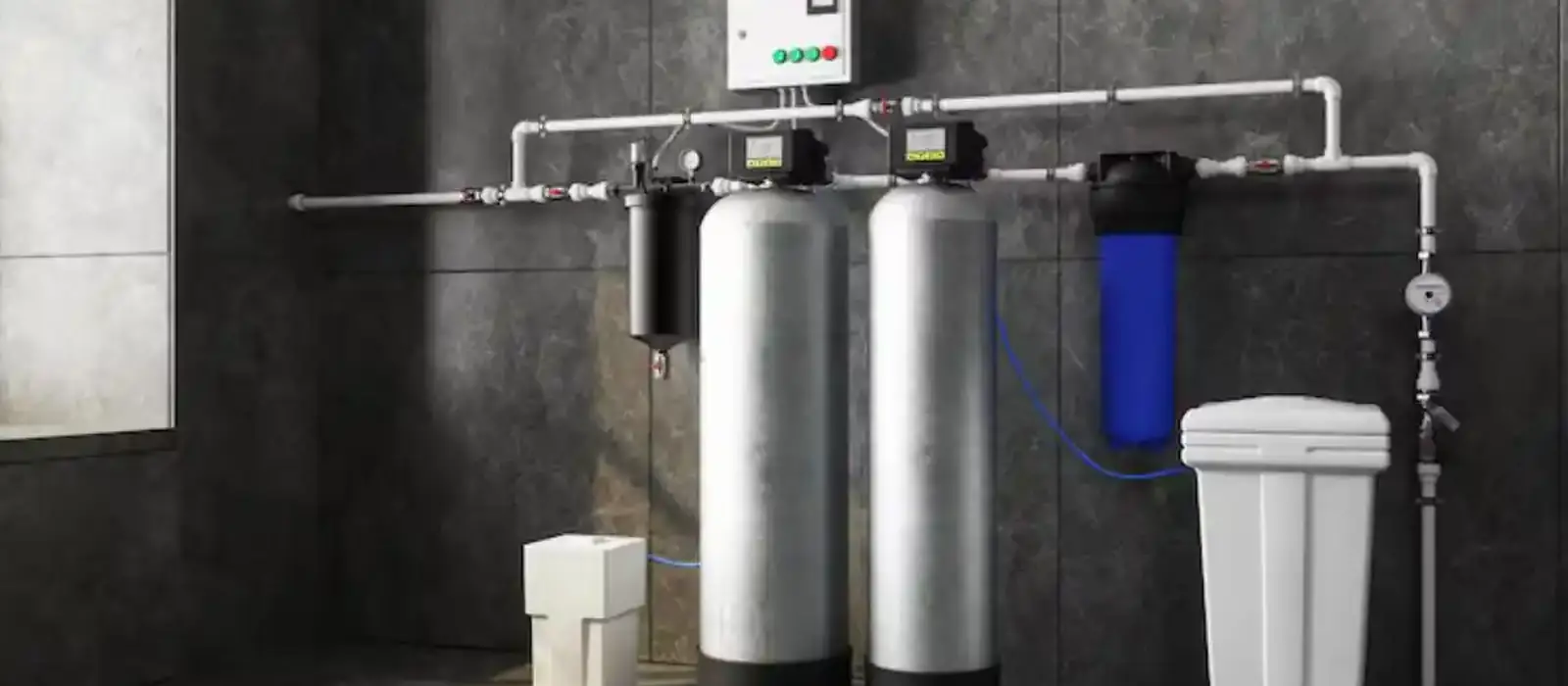
What Farmington's water means for your home
Farmington City says about 90 percent of its drinking water comes from city wells, with the rest bought from Weber Basin Water Conservancy District. The city reports water hardness of 8 grains per gallon for services south of 600 North and 10 grains per gallon north of it. Those are hard-water numbers, and they translate directly into scale.
You see the scale as white crust on faucets, cloudy glassware, stiff laundry and slow showerheads. You do not see it in the water heater, where it settles as a crust on the tank bottom and on heating elements, or in a tankless unit, where it narrows the heat exchanger. That hidden scale raises energy use and shortens life.
A softener swaps the hardness minerals for sodium or potassium, and the result is water that leaves much less scale behind. Whether that is worth it depends on the size of your household, your fixtures and your preferences.
What a softener or filter can do
Softening and filtering are different jobs. Many homes use a softener for scale and a filter for taste.
Reduce scale
Less buildup in the water heater, faucets, showerheads and appliances.
Protect the heater
A tank or tankless heater lasts longer with less scale, which our water heater repair page also covers.
Improve cleaning
Soap lathers better, so laundry and dishes need less detergent.
Filter taste and odor
A carbon filter can improve taste. It does not soften water on its own.
Treat specific issues
Iron, sediment and chlorine each call for a different filter.
Softener, filter and scale inhibitor
Each system has a different job and a different upkeep. A plumber can match them to what you want fixed.
| System | What it does | Maintenance |
|---|---|---|
| Salt-based softener | Removes hardness minerals | Refill salt, check settings and resin periodically. |
| Salt-free scale inhibitor | Changes how scale forms rather than removing minerals | Replace media on schedule. |
| Carbon filter | Reduces chlorine taste and odor | Replace the cartridge. |
| Sediment filter | Catches grit and particles | Replace the cartridge. |
The plumber checks that the softener drain connects correctly to your waste line.
Questions to answer before you buy
Five questions shape the right system, and the plumber walks through them on a visit.
- How many people live in the house, and how many bathrooms are there?
- Is your goal fewer scale deposits, better taste or both?
- Do you have a tankless heater that needs protection?
- Is there room, a drain and a power outlet near the main line?
- Are you comfortable adding salt on a regular schedule?
Installation and service
A softener installs on the main water line after the meter and before the heater, with a drain connection and a bypass valve. The plumber sets the hardness, regeneration schedule and salt level, and shows you how to refill and bypass the unit.
Farmington's building department lists plumbing systems among the work that needs a permit, so ask the department about requirements for your project. Existing softeners can be serviced, and a unit that stops softening often needs a resin check, a valve repair or a brine tank cleaning. For tankless owners, a softener pairs well with the flush routine on our tankless water heater page.
How to know if a softener is working
A working softener leaves soap lathering easily, glassware clear and fixtures free of white crust. A test kit that reads grains per gallon will confirm it. After a softener is installed, test the water at a tap that receives softened water and compare the number with your untreated supply.
If scale returns, the unit may be out of salt, bypassed or set incorrectly. A plumber can reset the controls, clean the brine tank and check the resin.
Tired of scale buildup?
Call (385) 488-1892 to talk it through.
What affects softener and filtration cost
Systems vary, so the plumber confirms the price before work starts.
Common questions
Farmington City reports 8 grains per gallon for services south of 600 North and 10 grains per gallon north of it. Check the city's water quality report for the latest numbers.
Less scale builds up in the tank and on elements, which can extend life. See water heater repair for scale symptoms.
A softener adds a small amount of sodium or potassium. People on low-sodium diets should ask their doctor and consider a separate drinking water tap.
Yes. Common repairs include valves, resin and brine tank cleaning.
Softener work is usually scheduled in advance. Call (385) 488-1892 to ask about timing and to describe what your unit is doing.
Sources and where to verify
Written by the Farmington 24/7 Plumbing team using the public sources below, which you can check yourself.
- Farmington City water department and its published water quality report: Water source, hardness and service line responsibility.
- Farmington building department: Permit and excavation rules.
- Utah Division of Professional Licensing plumbing FAQ: Plumber licensing in Utah.
Plumbing work in Utah follows the International Plumbing Code (IPC) with Utah amendments, and plumbers working in Utah are expected to work to it.