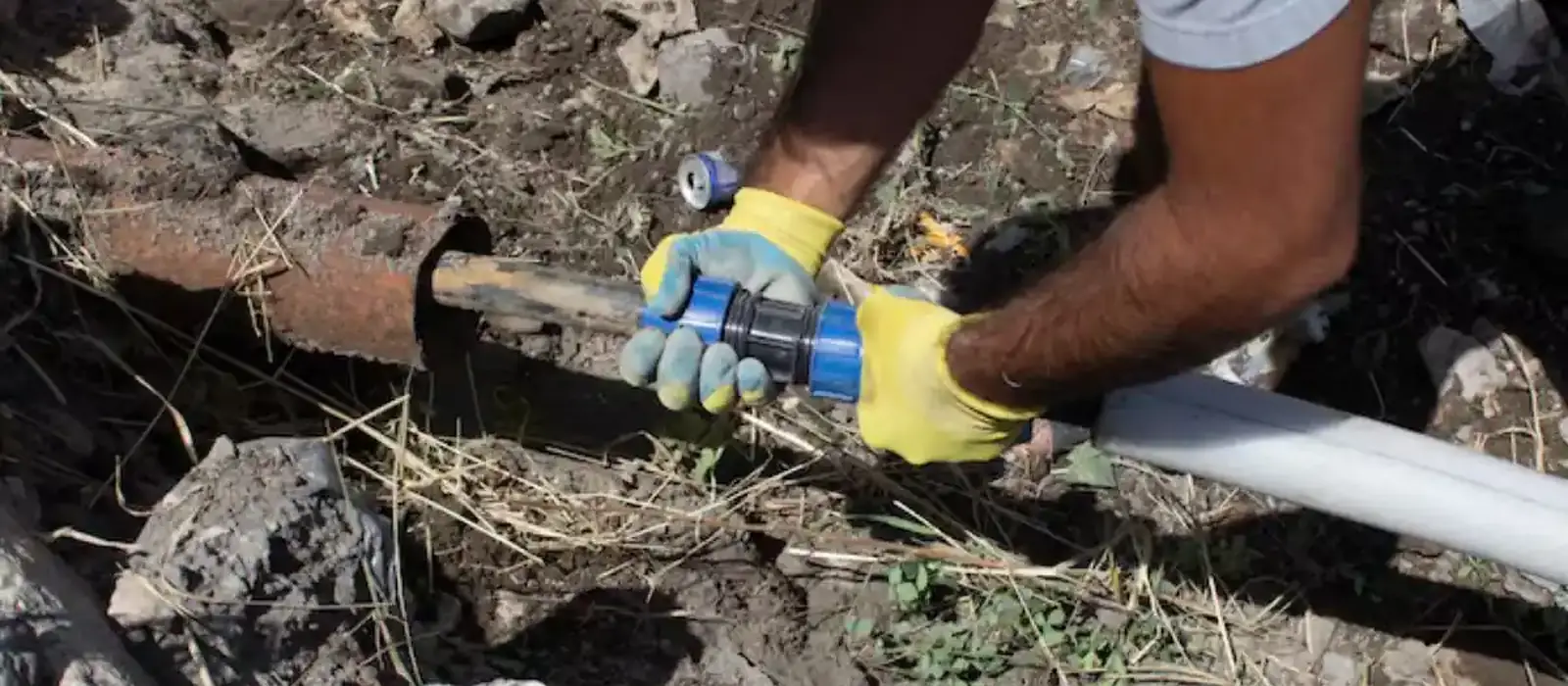
Who owns the line, and why it matters
Farmington's water department says property owners are responsible for private service lines from the public main to the home, and for leaks inside the home. In practice that means a failure anywhere between the connection at the main and your house is your repair, not the city's.
That ownership rule turns a slow, easy-to-ignore leak into a cost problem. Water escaping underground shows up as soft ground, a lush patch of lawn, a dip in the driveway or a meter that runs with every tap off. Because the water is metered before it reaches you, a leak after the meter is billed to you as usage.
If you are unsure where the line runs or who owns the break, call and describe what you see. The plumber can shut the line, test it and tell you where the boundary sits before any digging starts.
Signs the service line is failing
A service line leak is out of sight, so the signs are indirect. These are the ones to watch.
Wet or soft ground
Water surfacing in the yard, a sunken stripe of lawn or an unexplained muddy patch along the line route.
A moving meter
With every fixture off, the dial or low-flow indicator still turns.
Low pressure
A drop in pressure at every fixture, not just one.
Discolored water
Rusty or dirty water after a period of low flow can mean a failing metal line.
A high bill
A sustained rise in usage with no change in habits.
The sound of rushing water
A hiss or rush near the meter or the entry point.
Repair options for a service line
The plumber chooses the least disruptive method that gives a lasting fix.
| Option | How it works | Best fit |
|---|---|---|
| Spot repair | Dig to the leak and replace a short section | A single failed fitting or split. |
| Trenchless replacement | A new line is pulled through the old route with little surface digging | Long runs, driveways or landscaping to protect. |
| Full replacement by trench | The line is excavated and relaid | Old galvanized or damaged lines. |
| Shutoff and valve replacement | The main shutoff or curb stop is replaced | A valve that leaks or will not close. |
For leaks that you cannot place, our leak detection page explains how the location is confirmed first.
What Farmington's mix of old and new means underground
Farmington's Main Street Historic District dates from about 1853, and homes of that age or built in the following decades can still be fed by galvanized steel or older copper. Those pipes lose thickness from the inside, restrict flow and eventually fail at joints or thin spots. Newer homes from the building boom that doubled the city's population between 1980 and about 1992 have copper or plastic service lines that are now old enough to need attention.
The water itself matters. About 90 percent of Farmington's drinking water comes from city wells, with the rest bought from Weber Basin Water Conservancy District, and hardness runs 8 grains per gallon south of 600 North and 10 north of it. Hard water leaves scale that narrows small passages and can speed pitting in some pipe types.
Excavation needs a permit. Farmington's building department lists plumbing systems among the work that needs a permit, and most permits also need a separate excavation permit through Public Works. The plumber can describe what your repair requires, and you should confirm the details with the city.
What to do if you suspect a service line leak
Five simple checks tell you a lot before anyone arrives.
- Close every tap and appliance, then check whether the meter still moves.
- Close the main valve at the house. If the meter still moves, the leak is before the house.
- Do not dig on your own, since buried gas, electric and communication lines share the same yard.
- Call 811 before any digging so utilities can mark their lines.
- Photograph the wet area and the meter reading to show the plumber.
Share what you found on the phone, and the plumber arrives with the right equipment.
Water surfacing in the yard?
Close the main and call our number.
What affects service line repair cost
Service line work varies widely, and the plumber confirms your price before work starts.
Common questions
Farmington's water department says property owners are responsible for private service lines from the public main to the home. Confirm the boundary for your address with the city.
Close the main valve if water is surfacing or the meter keeps moving, and call (385) 488-1892. The service line from the public main to your building is the owner's responsibility.
Close the valve at the house and check the meter. If it keeps moving, the leak is between the meter and the house or in the street line.
Often, with trenchless methods, though not always. The plumber checks the route and tells you what fits.
Farmington's building department lists plumbing systems among the work that needs a permit, and most permits also need an excavation permit. Ask the department about your project.
Sources and where to verify
Written by the Farmington 24/7 Plumbing team using the public sources below, which you can check yourself.
- Farmington City water department and its published water quality report: Water source, hardness and service line responsibility.
- Farmington building department: Permit and excavation rules.
- Utah Division of Professional Licensing plumbing FAQ: Plumber licensing in Utah.
Plumbing work in Utah follows the International Plumbing Code (IPC) with Utah amendments, and plumbers working in Utah are expected to work to it.