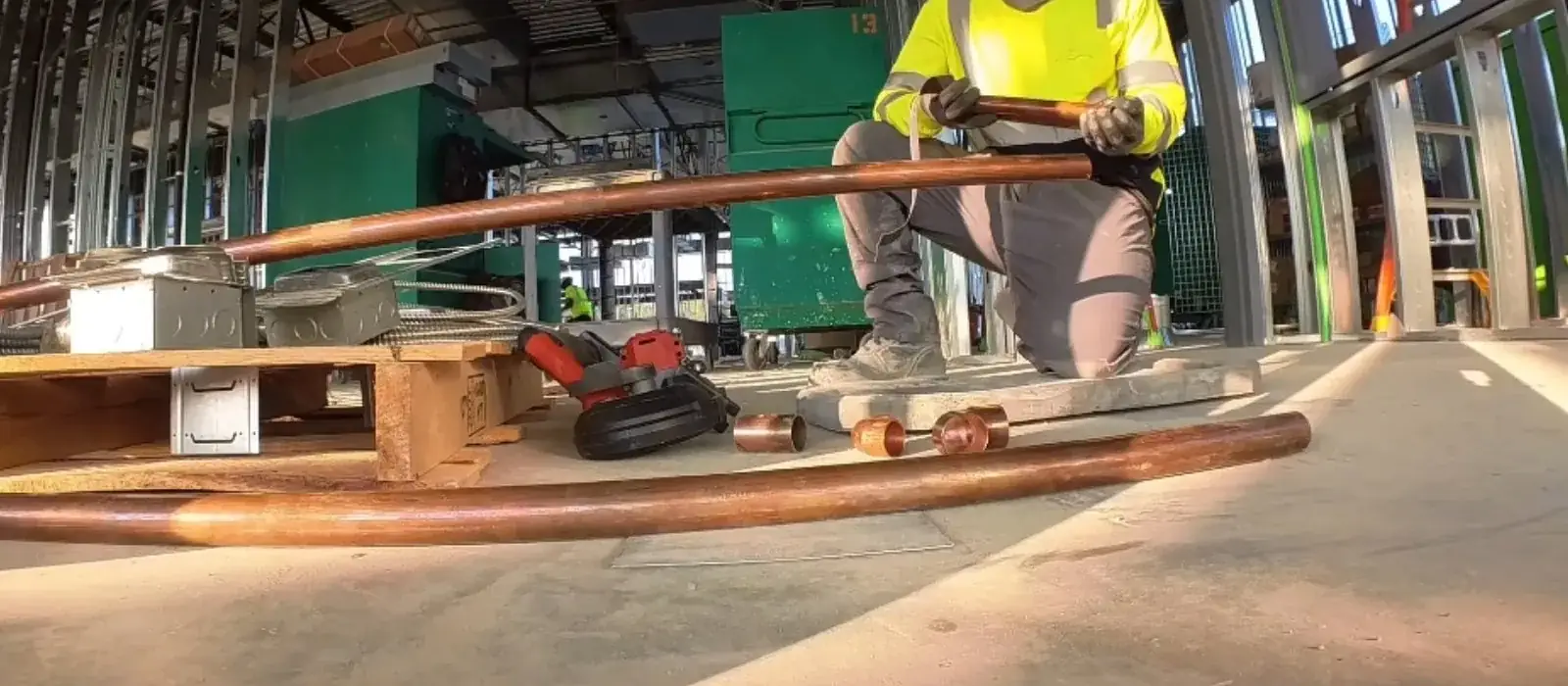
What we install
Most calls fall into a handful of categories. Here is what the work usually covers.
Kitchen
Sinks, faucets, disposals, dishwashers and pot fillers.
Bathrooms
Toilets, vanities, showers, tubs and bidets.
Laundry and utility
Washer boxes, utility sinks and drain connections.
Appliances
Ice maker lines, refrigerators with water, and water heaters through water heater installation.
Outdoor
Hose bibs, frost-free spigots and sprinkler connections.
Gas lines
Appliance connections and shutoff valves where the work is within our scope.
Planning an install in a Farmington home
A new fixture is straightforward when the supply and drain are in the right place. A remodel that moves a sink or adds a bathroom changes the plan, since drains need slope and venting, and supply lines need shutoffs. The plumber looks at the framing, the existing drain stack and the water pressure before quoting.
Farmington's building department lists plumbing systems among the work that needs a permit, and most permits also need a separate excavation permit through Public Works when digging is involved. Rules vary by project, so confirm with the department. Ask the plumber who does the work how the permit steps are handled.
The age of the house shapes the plan. Homes near the Main Street Historic District and mid-century neighborhoods can have drains and supply lines that need updating when a new fixture is added. Newer homes from the growth years after 1980 often have easier access and modern pipe, though many still need pressure checks or new shutoffs.
How an installation visit works
Most fixture installations finish in a single visit. A remodel with new rough-in takes more steps.
Walkthrough
The plumber looks at the space, the existing lines and the fixture you plan to install.
Install
Old fixtures are removed, new ones set, connected and sealed.
Test
Water pressure, drainage and leaks are checked before the plumber leaves.
Common installations and what they involve
Different jobs bring different hidden issues. This table lists what the plumber checks first.
| Project | What is involved | Watch for |
|---|---|---|
| Toilet | Remove old unit, check the flange, set a new wax ring | Damaged flange or subfloor. |
| Kitchen sink and faucet | Disconnect old, set new sink, connect supply and drain | Cabinet size and drain location. |
| Dishwasher | Water, drain and power connection, air gap or loop | Existing shutoff and drain height. |
| Shower or tub | Rough-in, valve, drain, waterproofing and trim | Venting and slope. |
| Outdoor spigot | New frost-free sillcock through the wall | Freeze protection. |
For bigger remodel work, ask about repiping while the walls are open.
What to do before installation day
A few safety steps before the visit keep the work smooth.
- Know where the main water shutoff is and confirm that it turns.
- Clear access to the work area and the shutoffs under sinks.
- Switch off power to any appliance being moved, and never work on gas lines yourself.
- Avoid using chemical cleaners in drains scheduled for work.
- Ask the plumber what permit steps apply, since Farmington's building department lists plumbing systems among the work that needs a permit.
Choosing fixtures that last in hard water
Farmington City reports water hardness of 8 grains per gallon south of 600 North and 10 grains per gallon north of it. That level leaves scale on fixtures and clogs small parts. When you choose a new faucet, showerhead or toilet, look for models with removable aerators, replaceable cartridges and easy-clean finishes.
A water softener or scale inhibitor reduces the load on everything you install. Ask the plumber about water softener options if you are installing several fixtures at once.
What to have ready on installation day
A little preparation makes the visit faster and the result cleaner.
- The fixtures and boxes, opened and checked for damage.
- Clear access to shutoffs under sinks and at the main.
- Pets and children kept out of the work area.
- Cabinet contents removed from under the sink.
- A note of any quirks, such as a slow drain or a stiff shutoff.
Planning an install?
Call (385) 488-1892 to talk it through.
What affects installation cost
Installation prices depend on the scope, so the plumber confirms the number before starting.
Common questions
Yes. We install customer-supplied fixtures and give you the price for labor first. The plumber may flag issues with a fixture before installing.
Farmington's building department lists plumbing systems among the work that needs a permit. Ask the department about your project.
Yes, though it needs planning for drains, vents and supply.
We handle appliance connections and shutoffs within our scope. Ask us about your project.
Planned installation is usually scheduled ahead. If a fixture has failed and is leaking, shut off its supply valve and call (385) 488-1892.
Yes. See our Kaysville and Centerville pages.
Sources and where to verify
Written by the Farmington 24/7 Plumbing team using the public sources below, which you can check yourself.
- Farmington City water department and its published water quality report: Water source, hardness and service line responsibility.
- Farmington building department: Permit and excavation rules.
- Utah Division of Professional Licensing plumbing FAQ: Plumber licensing in Utah.
Plumbing work in Utah follows the International Plumbing Code (IPC) with Utah amendments, and plumbers working in Utah are expected to work to it.