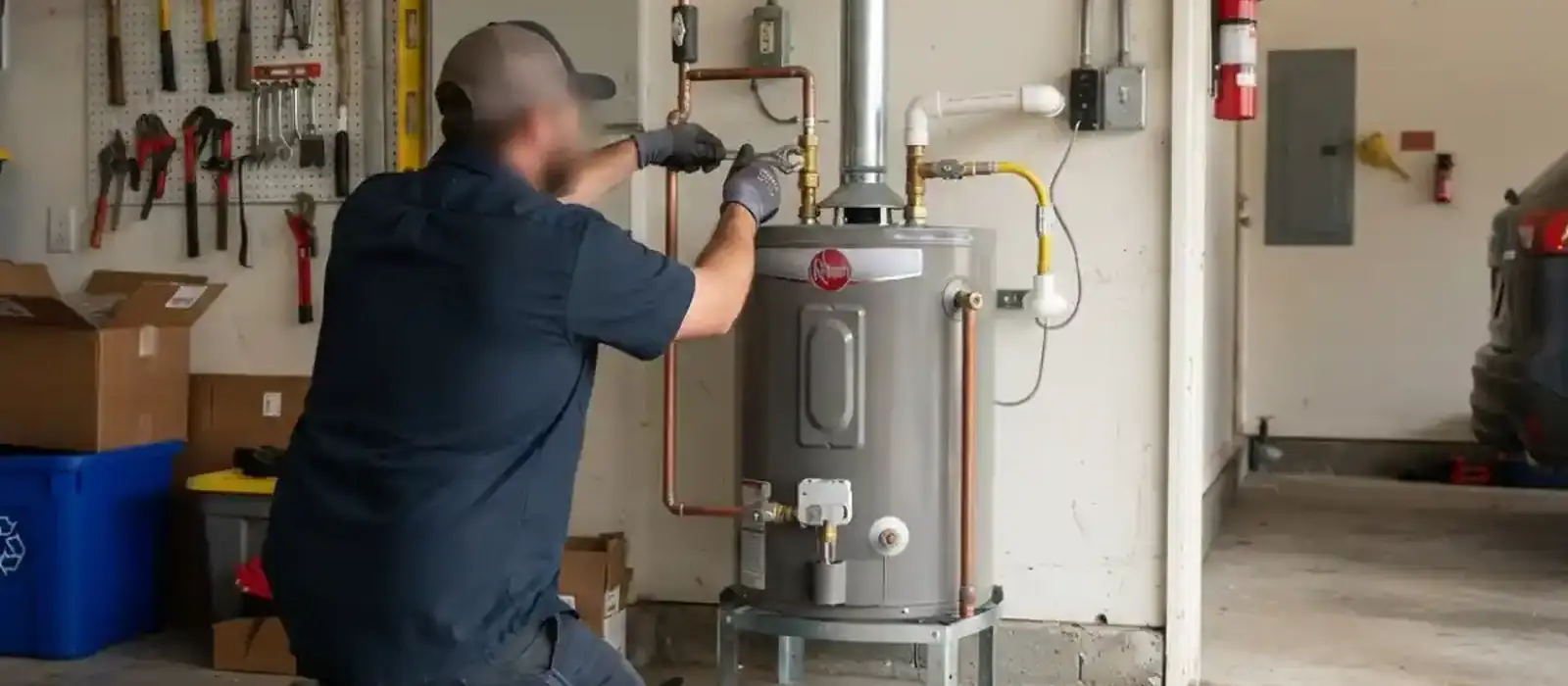
Planning a water heater installation in Farmington
Installation covers more situations than a like-for-like swap. A remodel that moves the utility room, a new addition, a basement finish or a switch from electric to gas all need the plumber to plan water lines, venting, drains and power before the unit arrives.
Start with how your household uses hot water. A family that runs two showers while the dishwasher operates needs more recovery capacity than a couple, and the answer decides between a 40 gallon tank, a 50 gallon tank, a hybrid unit or a tankless heater. If a tank has already failed, see our water heater replacement page.
Decisions to make before installation day
Six decisions shape every installation. Settling them first prevents surprises on the day.
Fuel
Natural gas is common along most Farmington streets, while electric works anywhere with the right circuit.
Capacity
Match gallons or flow rate to peak use, not average use.
Location
A unit in a garage, basement or closet needs the right clearance, drain and venting path.
Efficiency
Hybrid heat pump tanks use less electricity but need airflow and a condensate drain.
Expansion control
A closed plumbing system needs an expansion tank to protect the heater and fixtures.
Hard water
Farmington's 8 to 10 grains per gallon calls for planning a flush port or a softener.
Typical installation scenarios
Different projects call for different planning, so here are four common ones.
| Scenario | What the plumber plans | Common extras |
|---|---|---|
| New home or addition | Rough-in for gas or power, water lines, vent and drain pan | Permit, inspection, seismic strapping. |
| Electric to gas conversion | New gas line, venting and combustion air | Gas shutoff, vent upgrade, new permit. |
| Tank to tankless | Larger gas line, new venting, a wall mount and often a new circuit | Isolation valves for flushing, condensate drain. |
| Basement or garage relocation | New water, drain and vent routes | Leak pan, drain line to floor drain. |
Each of these is a quoted job.
Venting, gas and code questions
Gas water heaters need a vent path that carries exhaust outside and enough air for combustion, and the rules differ by vent type. The plumber checks the vent pitch, the connections and the draft before commissioning the heater. Electric and hybrid units skip combustion but still need the correct breaker and wire size.
Farmington's building department lists plumbing systems among the work that needs a permit, and most permits also need a separate excavation permit with Public Works when digging is involved. Rules vary by project, so ask the building department before you start. The plumber can describe what the installation includes.
For a planned install, talk through the pressure relief discharge too. The pipe must run to a safe drain, never be capped and never end somewhere that could scald a person.
What a good installation includes
The difference between a basic hookup and a careful installation shows up years later. These items are the ones worth checking.
- A shutoff valve on the cold supply and a union or flexible connectors that allow future service.
- A pressure relief valve with a discharge pipe to a safe location.
- An expansion tank where required by the water system.
- Seismic strapping, since Utah sits in an active earthquake region.
- A drain pan with a drain line when the heater sits above finished space.
- A clear walkthrough of thermostat setting, flushing schedule and warranty paperwork.
Planning an install?
What affects installation cost
Because installation covers many scenarios, the plumber prices each job after seeing the space.
Common questions
No. Planned installation makes sense when the tank is old, the household is growing or you are remodeling. Replacing before failure avoids a flood and an emergency schedule.
Household size and peak use decide it. Many homes use 40 or 50 gallons, while larger families or multiple bathrooms often need more recovery capacity or a tankless unit.
Yes. See our tankless water heater page for the flush and descale schedule that Farmington's hard water calls for.
Farmington's building department lists plumbing systems among the work that needs a permit. Ask the department about your project, since rules vary.
Yes. A closed system, such as one with a pressure reducing valve or a backflow device, usually needs an expansion tank to keep pressure spikes off the heater.
Yes. We install water heaters in Kaysville, Centerville, Bountiful and Layton.
Sources and where to verify
Written by the Farmington 24/7 Plumbing team using the public sources below, which you can check yourself.
- Farmington City water department and its published water quality report: Water source, hardness and service line responsibility.
- Farmington building department: Permit and excavation rules.
- Utah Division of Professional Licensing plumbing FAQ: Plumber licensing in Utah.
Plumbing work in Utah follows the International Plumbing Code (IPC) with Utah amendments, and plumbers working in Utah are expected to work to it.