Signs of a hidden leak
Leaks rarely announce themselves. These six signs are the ones homeowners notice first.
A higher water bill
A steady increase with the same household and no new irrigation usually means water is escaping.
A moving meter
With every fixture off, a spinning dial or a flickering low-flow indicator shows water is moving somewhere.
Damp or stained surfaces
Ceiling stains, bubbling paint and warm spots on a floor are classic tells.
Sound of running water
Hissing in a wall with all fixtures closed means a pressurized line is leaking.
Musty smell
A persistent mildew odor in one room often traces back to a slow leak.
Low pressure
A drop in pressure at every fixture may point to a leak on the supply line.
How a leak is located
Good detection is a process of elimination, and each step shrinks the search area.
Isolate
The plumber shuts off fixtures and confirms the meter is still moving, which proves a leak exists.
Divide the system
Closing valves in sequence narrows the leak to the service line, the hot side, the cold side or a branch.
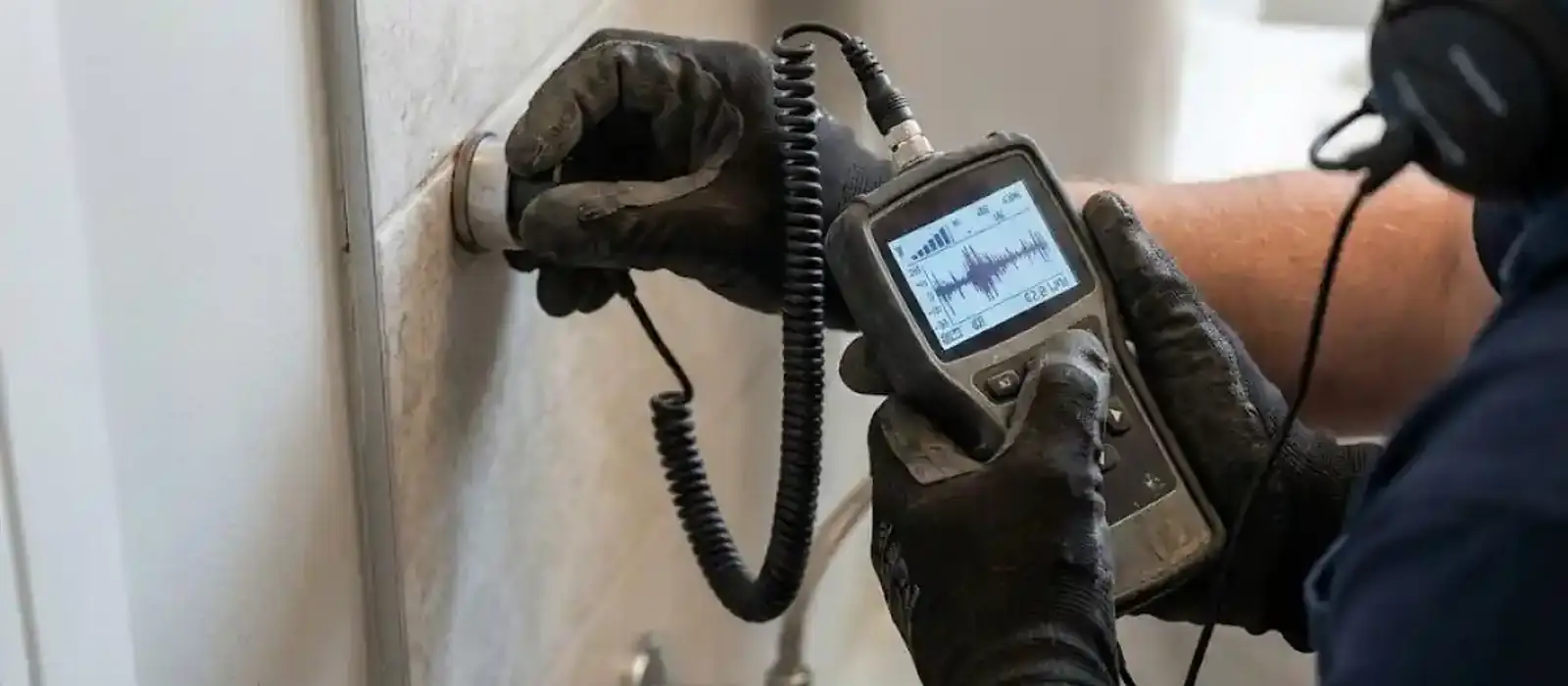
Listen and scan
Acoustic gear and thermal imaging pinpoint the spot without opening walls.
Confirm
The plumber marks the location and explains the repair before any cutting starts.
Who owns the leak: a Farmington rule worth knowing
Farmington's water department says property owners are responsible for private service lines from the public main to the home, and for leaks inside the home. That means a wet yard between the street and the house, or a meter that runs with all fixtures off, becomes the owner's repair.
The first test is simple. Shut off every tap and appliance, look at the meter and watch the low-flow indicator. If it moves, the leak is real. Closing the main valve at the house and watching the meter again shows whether the leak is outside or inside. If the meter still moves, the leak is on the service line between the meter and the house, and our water service line repair page covers that work.
Hard water is part of the picture. At 8 to 10 grains per gallon, Farmington water leaves scale that can clog small fixtures and, over decades, contribute to pinhole leaks in older copper and galvanized lines. Our repiping page describes what happens when pinholes spread.
Leak detection methods
A good tech mixes methods, because each one has a blind spot.
| Method | What it finds | Limit |
|---|---|---|
| Meter and pressure test | Whether a leak exists and which zone holds it | Does not pinpoint the spot. |
| Acoustic listening | The sound of water escaping a pressurized pipe | Background noise can mask a small leak. |
| Thermal imaging | Temperature differences from hot water leaks or wet materials | Works best on hot lines or heated slabs. |
| Camera inspection | Drain and sewer leaks inside the pipe | Does not find pressurized supply leaks. |
If the leak turns out to be a failed fitting or a split line, burst pipe repair covers the fix.
What to do while you wait for a plumber
A few quick checks give the plumber a head start and may spare you an hour of searching.
- Find the main shutoff valve and test that it turns.
- Photograph the meter reading with all fixtures off, then again after 30 minutes.
- Move belongings away from any wet area and open windows for airflow.
- Check under sinks, behind the toilet and around the water heater for obvious drips.
- Skip cutting drywall yourself, since the plumber can usually mark the exact spot first.
High water bill and no explanation?
Call (385) 488-1892 to talk it through.
What affects leak detection cost
Common questions
Turn off every fixture and watch the water meter. If the dial moves or the low-flow indicator spins, water is escaping. Your bill history can also show when the usage changed.
Usually not. Acoustic and thermal tools narrow the location so any opening is small and targeted.
Farmington's water department says property owners are responsible for private service lines and for leaks inside the home. Confirm your specific situation with the city.
A steady drip adds up over a billing period, and a running toilet or a leaking line can waste thousands of gallons. A meter check settles it.
Shut off the main valve and call for burst pipe repair. For a slow or hidden leak, check the meter with every fixture off and call (385) 488-1892 to describe what you see.
Yes. See our Kaysville and Centerville pages.
Sources and where to verify
Written by the Farmington 24/7 Plumbing team using the public sources below, which you can check yourself.
- Farmington City water department and its published water quality report: Water source, hardness and service line responsibility.
- Farmington building department: Permit and excavation rules.
- Utah Division of Professional Licensing plumbing FAQ: Plumber licensing in Utah.
Plumbing work in Utah follows the International Plumbing Code (IPC) with Utah amendments, and plumbers working in Utah are expected to work to it.