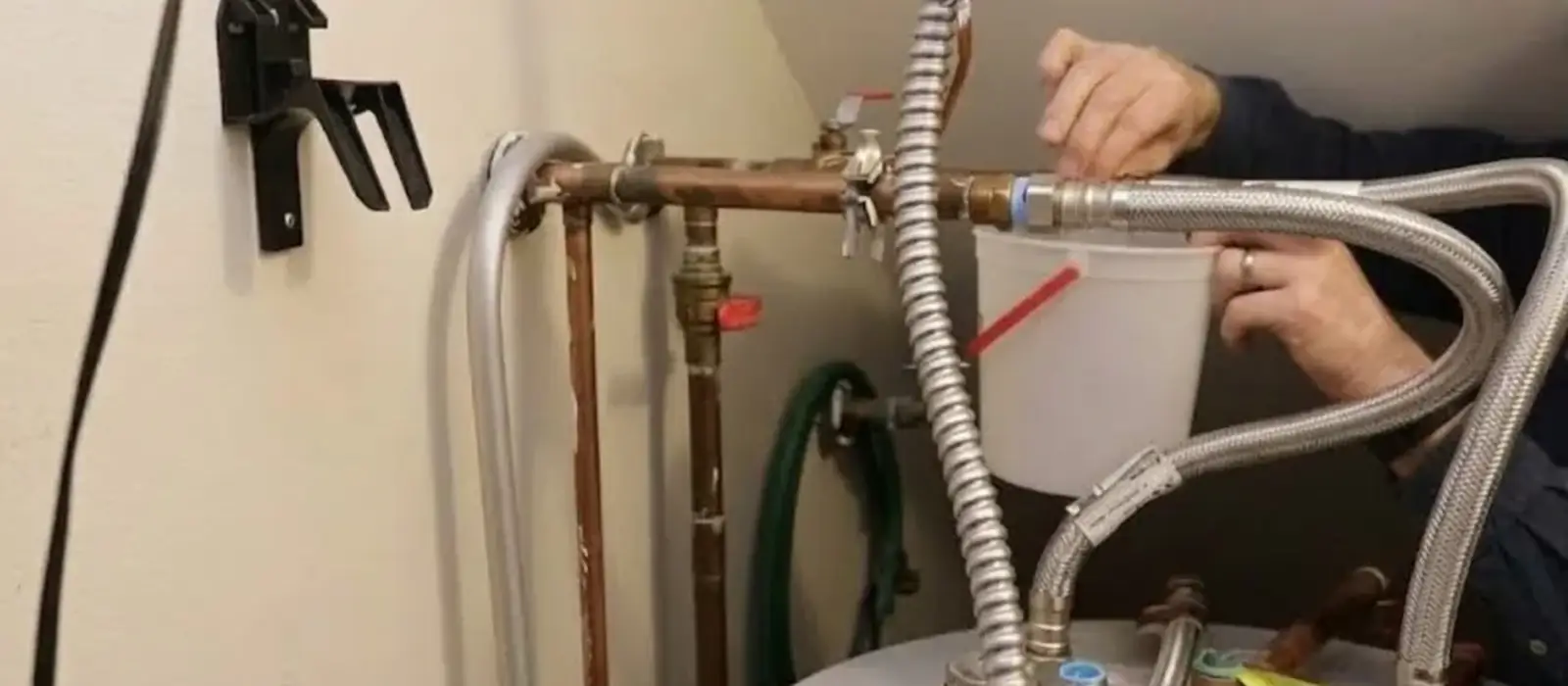
Water heater emergency: what to do first
A water heater holds around 40 to 50 gallons in a typical home tank, and a split tank empties quickly. These steps limit the damage.
- Leaking from the tank body. Shut off the cold water supply valve at the top of the heater, then turn off power at the breaker or set the gas valve to off.
- Water on the floor from a pipe or valve. A dripping relief valve or a loose fitting can sometimes be shut off at the supply and repaired quickly.
- Smell of gas. Leave the house and call 911 or your gas utility before calling us. Do not use light switches or phones inside.
- Scalding or steaming water. Turn the thermostat down and stop using hot taps until a plumber checks the controls.
Once the heater is isolated, call us at (385) 488-1892. If the plumber confirms the tank itself has failed, our water heater replacement page explains the next step.
Symptoms and what usually causes them
Callers usually describe a symptom, not a part, and the symptom narrows down the repair.
No hot water at all
On an electric heater a failed heating element or tripped limit switch is common. On a gas heater, look at the pilot or igniter and the thermocouple.
Water is only lukewarm
A failed lower element, a broken dip tube mixing cold water in or heavy sediment can all cut capacity.
Rumbling or popping
Mineral scale on the tank bottom traps steam bubbles, and the noise is the scale cracking under heat.
Rusty or smelly hot water
A spent anode rod lets the tank start to corrode, and sulfur smells come from bacteria reacting with the rod.
Water around the base
Condensation, a loose connection or a failed valve is fixable, while a seeping tank seam is not.
Hot water runs out fast
Sediment shrinks usable volume, and a failed element cuts the heater's recovery rate.
Hard water and water heaters in Farmington
Farmington City publishes hardness of 8 grains per gallon south of 600 North and 10 grains per gallon north of it. That is hard water by any common scale, and heating hard water drives dissolved calcium out as scale on the tank floor and on heating elements.
The practical result is that Farmington water heaters often lose efficiency and develop noises years before the tank itself wears out. A yearly flush, a replacement anode rod and an element swap are small repairs that extend life when the tank is otherwise sound. A water softener reduces how fast scale forms.
If your heater is more than about 10 years old and has started leaking at the base, repair is rarely worth the money. The plumber will say so plainly, and you will see the replacement option and price side by side.
Repair or replace: a quick guide
Age is the first filter. A good tank can run longer than these ranges, and a neglected one can fail sooner.
| Situation | Usually repair | Usually replace |
|---|---|---|
| Tank age under 8 years | Element, thermostat, igniter, valve | Only if the tank itself leaks. |
| Tank age 8 to 12 years | Repair if the fault is one inexpensive part | Consider replacement if two repairs are due. |
| Tank age over 12 years | Short-term fix to restore hot water today | Often the better value, especially with base leaks. |
| Rust-colored hot water only | Anode rod and flush | If the rust comes from the tank wall itself. |
The numbers above are rules of thumb, not guarantees. A plumber who sees the tank can give a firmer answer.
Gas, electric and hybrid heaters
Gas heaters rely on a gas control valve, a thermocouple or flame sensor, a burner and venting. Failures here often show up as a pilot that will not stay lit. Electric heaters use upper and lower heating elements and two thermostats, and a tripped reset button on the upper thermostat is the first thing a plumber checks.
Hybrid heat pump heaters combine an electric element with a compressor on top of the tank. They need airflow and a condensate drain, and error codes on the display point to the fault. A tankless heater is a different machine, covered on our tankless water heater page.
No hot water this morning?
Call to ask about water heater repair.
What affects water heater repair cost
Five factors set the price, and the plumber explains each one before you approve the work.
Common questions
Shut off the cold water supply and the power or gas to the heater, then call (385) 488-1892 and say where the water is coming from. A leak from the tank body usually means replacement, not repair.
Almost always scale. Farmington's hard water leaves mineral deposits on the tank floor, and trapped steam bubbles make the popping sound. A flush often quiets it, though a heavy buildup may mean the tank is wearing out.
No. Shut off the cold water supply and the power or gas, then call. A leak from the tank body cannot be repaired, and water near electrical parts is a hazard.
A dirty pilot assembly, a failing thermocouple or a draft in the venting are the usual causes. Repeated outages deserve a plumber, since the gas control valve can fail unsafely.
Yes. Error codes, scale buildup and flow sensor faults are common tankless repairs. See our tankless water heater page for flushing and descaling.
When the tank leaks, when it is past roughly 12 years or when repairs add up to most of the cost of a new unit. Our replacement page lays out the options.
Sources and where to verify
Written by the Farmington 24/7 Plumbing team using the public sources below, which you can check yourself.
- Farmington City water department and its published water quality report: Water source, hardness and service line responsibility.
- Farmington building department: Permit and excavation rules.
- Utah Division of Professional Licensing plumbing FAQ: Plumber licensing in Utah.
Plumbing work in Utah follows the International Plumbing Code (IPC) with Utah amendments, and plumbers working in Utah are expected to work to it.