When a failed water heater is an emergency
A heater that has started leaking from the tank itself will not stop on its own. The steel liner has corroded through, and repair is not possible. The water on your floor keeps coming until the tank is empty, which can be 40 gallons or more, so the first job is stopping the supply.
Once the cold water valve is closed and power or gas is off, call (385) 488-1892. Ask about timing when you call, and ask for the price before the old tank leaves its closet.
Not every failure is a leak. A heater that gives no hot water and shows heavy corrosion at the base, or one that trips its pressure relief valve repeatedly, is also likely near the end of its service life. Our water heater repair page explains when repair still makes sense.
How a replacement visit works
Most tank replacements finish in one visit once the right unit is on the truck. Here is the sequence.
Shut off and drain
The plumber isolates water, power and gas, then drains the old tank to a floor drain or outside.
Remove and prepare
The old unit is disconnected, and the plumber checks the pad, the pan, the shutoff valve and the venting.
Set and connect
The new heater is set, connected to water, power or gas, and fitted with a new relief valve and discharge line.
Test and review
The plumber fills the tank, checks for leaks, lights or powers the unit and walks you through the thermostat setting.
Choosing a replacement type
The right unit depends on the fuel you have, the space available and how much hot water your household uses at once.
| Type | Best fit | Trade-off |
|---|---|---|
| Standard gas tank | Homes with a gas line and a vent already in place | Needs venting and combustion air, fuel cost varies. |
| Standard electric tank | Homes without gas service | Higher running cost, simple installation. |
| Hybrid heat pump tank | Utility rooms with space and airflow | Higher upfront price, lower energy use, more clearance needed. |
| Tankless gas or electric | Households that want endless hot water and wall space | Higher upfront price, needs scheduled flushing in hard water. |
Our water heater installation and tankless water heater pages cover planned upgrades in more detail.
What Farmington water means for the new heater
Farmington City reports hardness of 8 grains per gallon south of 600 North and 10 grains per gallon north of it. A new tank in hard water collects scale on its floor and elements, so an anode rod check every few years and an annual flush protect your warranty and your efficiency.
If you are replacing a failed tank, ask the plumber about a water softener or at least a scale inhibitor on the cold supply. A softener lowers the mineral load that shortens heater life, and Farmington's own numbers make the case for it.
Farmington's building department lists plumbing systems among the work that needs a permit. Ask the city whether your replacement needs one, since rules depend on the project.
What gets replaced along with the heater
A good replacement is more than swapping tanks. These parts are worth updating while everything is disconnected.
- A new temperature and pressure relief valve and a discharge pipe that runs to a safe drain.
- New flexible water connectors or copper nipples, since reusing old ones invites leaks.
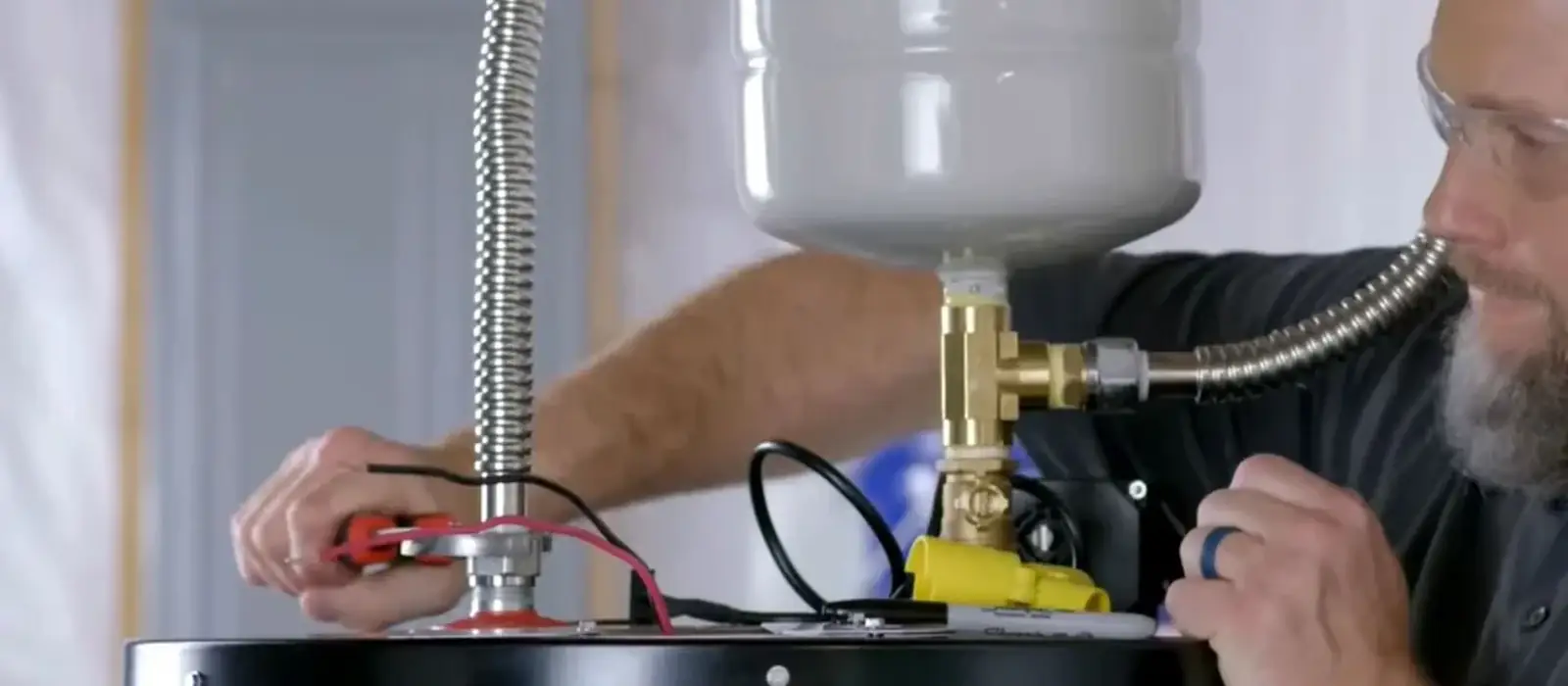
- An expansion tank, when the home has a closed system such as a pressure reducing valve or backflow device.
- A new gas flex line or a shutoff valve if the old one will not close fully.
- A drain pan, when the heater sits above finished space.
Tank leaking right now?
What drives the cost of a replacement
Replacement prices vary widely, and these five factors explain why. You will hear the price before any work starts.
Common questions
Ask about timing and unit availability when you call (385) 488-1892, and ask for the price before work starts. Have the heater's age, fuel type and tank size ready.
Most tank swaps take a few hours once the plumber is on site. Tankless conversions or moving a vent can take longer.
Water leaking from the body of the tank, a badly rusted base and repeated relief valve discharge all point to replacement. A plumber can confirm.
Farmington's building department lists plumbing systems among the work that needs a permit. Permit rules vary, so ask the building department about your specific project.
It depends on your gas supply, hot water use and budget. Tankless units give continuous hot water but need descaling in hard water. See our tankless page.
Sources and where to verify
Written by the Farmington 24/7 Plumbing team using the public sources below, which you can check yourself.
- Farmington City water department and its published water quality report: Water source, hardness and service line responsibility.
- Farmington building department: Permit and excavation rules.
- Utah Division of Professional Licensing plumbing FAQ: Plumber licensing in Utah.
Plumbing work in Utah follows the International Plumbing Code (IPC) with Utah amendments, and plumbers working in Utah are expected to work to it.