Signs the vent may be clogged
A vent clog looks like a drain clog, so check for these signs before you snake a drain that is not the problem.
Gurgling drains
Air is being pulled through water in the trap because it cannot enter from the roof.
Slow drains in several fixtures
The system needs air behind the water to flow.
Toilet bubbles
A toilet bubbling when the shower drains is a classic sign.
Sewer smell
Dry traps and gas pushing back can let odor into the room.
Water traps that dry
Siphoning pulls the water out of traps and lets gas in.
If only one fixture is slow, the clog is likely in that fixture's drain, not the vent. See drain cleaning.
What the vent does
A drain pipe works like a straw. If you cover the top, the water does not flow smoothly. The vent opens the system to the air so water can leave without creating suction that pulls traps empty. Without it, the water in your toilet and sink traps can siphon out, and gas can enter the room.
Vents clog for three common reasons. Leaves and debris fall into the opening, birds and rodents nest in it, and in cold climates frost builds up in the opening during a hard freeze. Frost closing a vent is a winter problem in Utah, and it clears when the temperature rises.
A safe way to check and clear it
The job is simple but the roof is risky. These five steps keep it safe.
Find the vent
Look for pipes rising through the roof, often 2 or 3 inches wide, usually near bathrooms and the kitchen.
Get up safely
Use a stable ladder, stay off wet or icy roofs and do not climb alone on a steep slope.
Look and clear
Remove leaves and nests by hand, using gloves.
Flush
Run a garden hose into the vent and watch whether the water drains.
Snake if needed
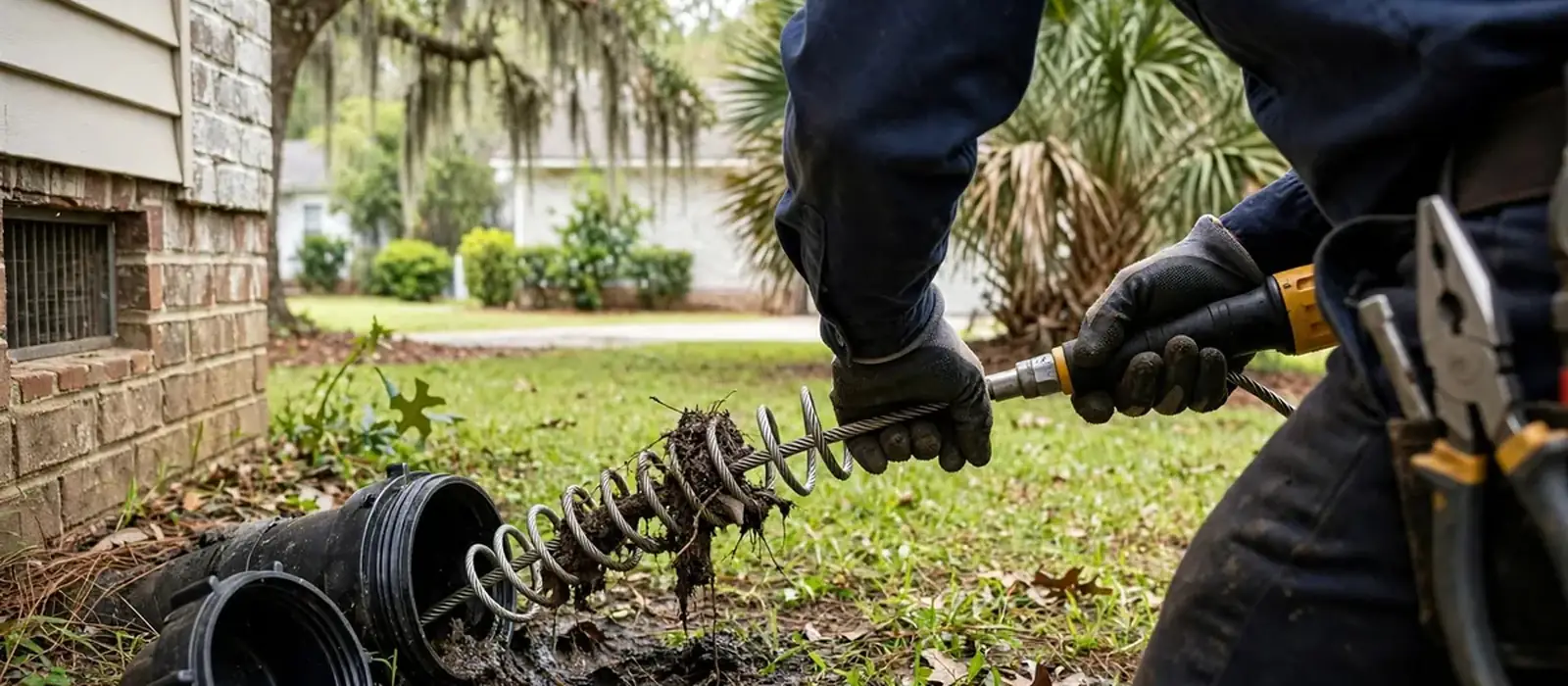
If water backs up, feed a plumbing snake down the vent to break up the blockage.
Winter frost and old houses in Farmington
Farmington is on the Wasatch Front, where cold snaps can frost over the top of a vent pipe and block it until temperatures rise. In older homes near the Main Street Historic District, dating from about 1853, the vent pipe may be an old galvanized or cast iron stack that has narrowed from rust inside. Narrowed old pipe clogs more easily than new plastic.
If your home was built during the growth surge that doubled the city's population between 1980 and about 1992, vents are usually plastic and tolerate a snake well. A plumber can run a camera down a vent to check, which is covered under sewer inspection methods.
Source type: Farmington City history pages.
Vent problem or drain clog
Two similar problems need different fixes. Use this table to decide where to start.
| What you see | More likely vent | More likely drain |
|---|---|---|
| Gurgling at several fixtures | Yes | Sometimes. |
| Only one fixture slow | Rarely | Yes. |
| Toilet bubbles when the shower runs | Yes | Possible in main line. |
| Water backs up into the tub | Less common | Yes, main line. |
| Sewer smell with no backup | Yes | Possible. |
If water backs up into other fixtures, stop and see sewer line cleaning, since the main line may be involved.
When to call a plumber
A vent job is not worth a fall. These five situations are the ones for a pro.
- The roof is steep, wet, icy or you are not comfortable on it.
- Water backs up or a snake meets a hard blockage.
- The vent is blocked inside the wall or attic and not reachable from the roof.
- You smell sewer gas inside and the vent seems clear.
- You suspect a collapsed or broken vent pipe.
Why a vent matters to every drain in the house
Every fixture has a trap, a curved pipe that holds a little water to block sewer gas. When water flows down a drain, it pulls on the air behind it. The vent supplies that air. Without it, flow slows, the trap can be pulled dry and the drain gurgles as air bubbles through the water.
That is why a vent clog shows in several fixtures, often the ones farthest from the main stack. If a single sink gurgles and nothing else does, the vent for that branch is the usual suspect.
Safe roof habits
A clogged vent is a nuisance, but a roof fall is a serious injury. These five habits keep the job safe.
- Never climb on a wet, icy or frosty roof.
- Use a ladder tall enough to extend above the eave, secured at the base.
- Wear shoes with grip and keep a partner on the ground.
- Avoid working alone, and avoid steep slopes.
- Stay away from power lines near the roof edge.
What a plumber does differently
A plumber can enter from the roof or from an access point inside, run a camera down the pipe, and use a longer snake or a water jet to clear it. If the vent is broken or crushed in the wall, the plumber can locate the break and repair it. Our drain cleaning plumbers handle both vents and drains.
If sewer smell inside the house persists and the vent seems clear, a plumber can also check for dry traps, a cracked drain or a missing cap on a cleanout.
Preventing vent clogs
A cap or screen on the vent opening keeps birds and leaves out, but a screen can clog with frost or debris, so use one designed for vents. Trim branches that overhang the roof and check the vent in fall. Have a plumber look at vents when you replace a roof, since flashing and vent boots can crack and leak.
If you have had a nest or a clog before, check again after storms. A quick look from a ladder can prevent a long weekend of gurgling drains. See our Centerville page for coverage south of Farmington.
Gurgling drains?
Call (385) 488-1892 to talk it through.
Questions from Farmington homeowners
Yes. Blocked venting can let traps siphon dry or push gas into the house.
Yes, as a first step. If water drains, the vent is likely clear. If it backs up, a snake is the next step.
In hard cold snaps it can. The clog clears when the temperature rises.
Usually not, unless sewer gas is coming into the house or the main line is also blocked.
If water backs up into a tub or floor drain, it is the main line. If fixtures gurgle but drain, suspect the vent.
Sources and where to verify
Written by the Farmington 24/7 Plumbing team using the public sources below, which you can check yourself.
- Farmington building department: Permit and excavation rules.
- Utah Division of Professional Licensing plumbing FAQ: Plumber licensing in Utah.
Plumbing work in Utah follows the International Plumbing Code (IPC) with Utah amendments, and plumbers working in Utah are expected to work to it.