Three decisions before you buy
The wrong size or fuel is the most costly mistake. Settle these first.
Fuel
Natural gas, electric or hybrid heat pump. Match what your home already has unless you are planning a conversion.
Size
A 40 gallon tank suits a small household, and a 50 gallon or larger unit suits more people and more bathrooms.
Location
The unit needs clearance for service, a drain pan if it sits above finished space and a safe vent path if it is gas.
Our water heater installation page covers planned installs in more depth.
The installation sequence
A whole installation usually runs in this order. Skipping the fill step before power is a classic way to burn out an element.
Shut off and drain
Turn off power or gas, close the cold water valve, and drain the old tank to a floor drain or outside.
Remove the old unit
Disconnect water, gas or power and venting, and move the unit out.
Set and level the new heater
Place it on a pan or pad, and check the clearances.
Connect everything
Water lines with new connectors and a shutoff, a new relief valve, gas or power, and the vent for gas models.
Fill, purge and test
Fill the tank with a hot tap open until water runs steady, then restore power or gas and check for leaks and draft.
Safety items that cannot be skipped
These five items protect your home. Gas work and venting are the reasons many homeowners hand the job to a plumber.
- A temperature and pressure relief valve with a discharge pipe to a safe location.
- A gas shutoff and a leak test on every gas joint.
- A proper vent with the right pitch for gas heaters, and combustion air.
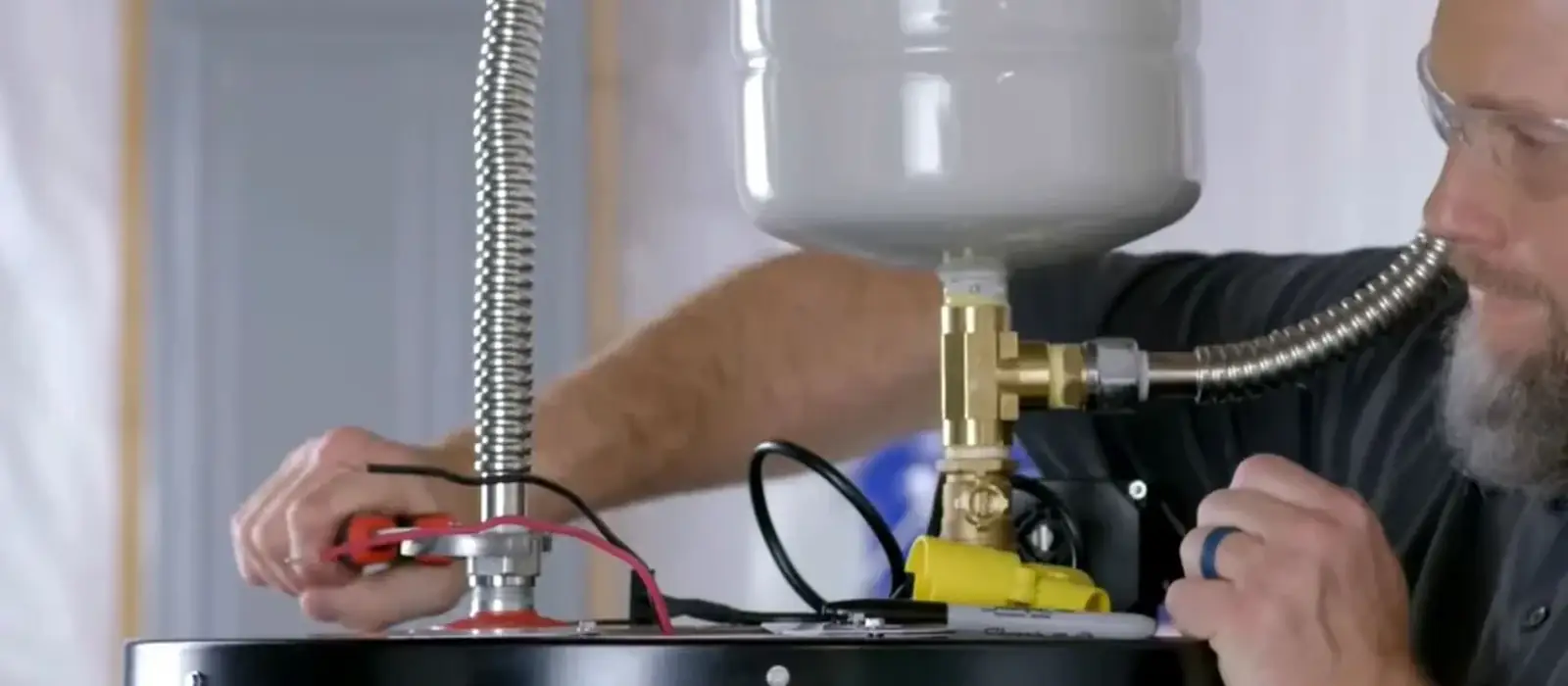
- An expansion tank on closed systems.
- Seismic strapping, since Utah sits in an active earthquake region.
If you smell gas at any point, leave the house and call 911 or your gas utility first.
Permits and water quality in Farmington
Farmington's building department lists plumbing systems among the work that needs a permit. Permit rules vary by project, so confirm with the department before you buy or install. A plumber can handle the paperwork for the work they do.
Farmington City also publishes hardness, 8 grains per gallon south of 600 North and 10 grains per gallon north of it. Hard water scales tank bottoms and elements, so plan an annual flush and an anode rod check. For tankless units, plan isolation valves for flushing. A softener is worth pricing in when you replace a heater.
Source type: Farmington City building department and water pages.
DIY or plumber?
An electric tank swap is within reach for a skilled homeowner, though the electrical connection needs care. A gas unit adds a venting and gas leak test that is easy to get wrong, and an error here can mean carbon monoxide or a gas leak. Tankless conversions add gas line and vent work that almost always needs a plumber.
If the old tank has already failed, see water heater replacement.
Gas, electric and hybrid: what changes during installation
A gas heater needs a gas line with a shutoff and a sediment trap, a vent that rises with a steady pitch and enough air in the room for combustion. An electric heater needs a dedicated circuit with the right breaker and wire size, and a disconnect nearby. A hybrid heat pump unit needs clearance around the top for airflow and a drain for condensate.
Each type also has its own failure points. Gas units fail at the burner and the vent. Electric units fail at the elements and thermostats. Hybrid units add a compressor that needs space and attention. Knowing this before you buy helps you choose the type that fits your home.
Questions to settle before buying
Five questions decide most of the work. Answer them before you visit a store.
| Question | Why it matters |
|---|---|
| Where will the unit sit? | Clearance and venting depend on the space. |
| Do I have gas? | Switching fuel costs more than replacing like for like. |
| How many people live here? | Capacity depends on use. |
| Is the plumbing a closed system? | An expansion tank may be required. |
| Do I need a permit? | Rules vary, so ask the building department. |
Our water heater replacement plumbers can answer the technical ones on a visit.
Disposing of the old heater
An old tank is heavy even when empty and awkward to move. Many scrap yards take it for the metal, and some haulers take it with a fee. A plumber who installs the new heater can usually remove the old one as part of the job, which saves you the lifting.
Before it leaves the house, drain it completely, and remove any gas or electrical connections safely. Never carry a tank that still has water in it.
What a clear installation price should include
A written price should name the unit, the labor, new connectors, the relief valve and discharge pipe, any expansion tank, venting changes and disposal of the old tank. It should say whether permit fees are included or separate. If the plumber finds corroded shutoffs or old gas lines, the price may change, and you should hear about it before the work continues.
Compare quotes line by line. A low price that leaves out the expansion tank or the permit is not lower once those are added. Our Bountiful and Centerville pages show where we install.
Warning signs your old heater will fail soon
Replacing before failure avoids a flood. These five signs say it is time to plan.
- Rust-colored hot water or rust streaks at the connections.
- Popping or rumbling that does not clear after a flush.
- Moisture or a puddle at the base of the tank.
- The tank is more than ten years old.
- The relief valve drips or the heater cycles constantly.
Ready to install?
Call (385) 488-1892 to talk it through.
Questions from Farmington homeowners
A tank swap often takes a few hours once the plumber is on site. Venting changes, new gas lines or a conversion to tankless take longer.
If your plumbing is a closed system, with a pressure reducing valve or backflow device, an expansion tank protects the heater and fixtures. A plumber can tell you.
Household size, bathrooms and peak use decide it. Many homes use 40 or 50 gallons, with larger households needing more.
Farmington's building department lists plumbing systems among the work that needs a permit. Ask the department about your project.
Only if it meets code for the new unit. A plumber checks pitch, size and draft before connecting.
Sources and where to verify
Written by the Farmington 24/7 Plumbing team using the public sources below, which you can check yourself.
- Farmington City water department and its published water quality report: Water source, hardness and service line responsibility.
- Farmington building department: Permit and excavation rules.
- Utah Division of Professional Licensing plumbing FAQ: Plumber licensing in Utah.
Plumbing work in Utah follows the International Plumbing Code (IPC) with Utah amendments, and plumbers working in Utah are expected to work to it.